The Move-In / Move-Out Inspection Checklist Every Landlord Needs

In this guide
We cover everything you need to know about this topic — best practices, common mistakes to avoid, step-by-step guidance, and the right template to use. This guide takes about 6 min to read.
Security deposit disputes account for the largest share of landlord-tenant legal actions in the United States. In the vast majority of cases, the dispute comes down to one issue: the landlord says the tenant caused damage, and the tenant says the damage was already there. Without documentation, it is one person's word against another's — and courts tend to side with the tenant when the landlord cannot prove the condition at move-in.
A thorough move-in inspection checklist, conducted with the tenant present and signed by both parties, prevents this problem entirely. Here is how to do it right.
What the move-in inspection should cover
Walk through every room in the unit and document the condition of walls, ceilings, floors, windows, doors, fixtures, and appliances. Be specific. "Living room — good condition" is not useful documentation. "Living room — small scuff mark on south wall near light switch, carpet shows normal wear in traffic path, all windows open and close properly" is documentation that holds up.
For each room, your checklist should cover the condition of walls (note any marks, holes, stains, or damage), condition of ceilings (cracks, stains, peeling paint), condition of floors (scratches, stains, damage to carpet or hardwood), windows (operation, locks, screens, blinds or curtains), doors (operation, locks, handles), light fixtures and switches (all working), electrical outlets (all functional), and any built-in appliances or fixtures.
Kitchen and bathroom require extra detail
Kitchens and bathrooms are where the most expensive damage tends to occur, so inspect them carefully. In the kitchen, test every appliance: stove burners, oven, dishwasher, garbage disposal, range hood fan. Open and close all cabinet doors and drawers. Check the countertops for chips, burns, or stains. Run the faucet and check under the sink for leaks.
In bathrooms, run the shower and tub, flush the toilet, check for leaks around the base, inspect caulking and grout, and check the condition of mirrors, medicine cabinets, and towel bars. Water damage from bathroom issues can be extremely expensive to repair, so documenting the baseline condition is essential.
Do not forget exterior areas and common spaces
If your tenant is responsible for any exterior areas — a patio, balcony, garage, parking space, or yard — include these in the inspection. Note the condition of any fencing, landscaping, exterior lighting, and the driveway or walkways.
If the property has shared spaces like laundry rooms, storage areas, or common hallways, document the baseline condition of any elements the tenant has access to. This helps reduce confusion about damage in shared areas being attributed to a specific tenant.
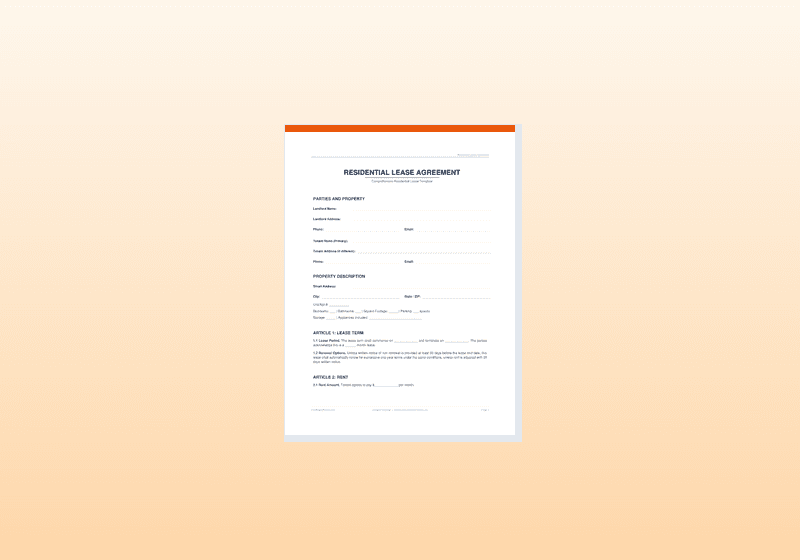
Residential Lease Agreement Pack
The template this guide walks through — ready to customize with your details in PDF, ZIP Bundle formats.
Take photos and date them
A written checklist is good. A written checklist with dated photos is much better. Photograph each room from multiple angles, and take close-up photos of any existing damage noted on the checklist. Store these photos digitally with the inspection date in the file name, and keep them with the signed checklist in the tenant's file.
Some landlords use video walkthroughs as well. If you do, narrate what you are seeing as you walk through so the video clearly documents the condition of each element.
Both parties must sign
The inspection must be conducted with the tenant present, and both parties must sign the completed checklist. The tenant's signature confirms that they agree with the documented condition of the property at the time they took possession. Without the tenant's signature, the document carries significantly less weight in a dispute.
Give the tenant a copy of the signed checklist. Keep the original in their file. If the tenant identifies any issues you missed, add them to the checklist before both parties sign.
The move-out inspection
The move-out inspection follows the same checklist as the move-in, creating a direct comparison. Walk through every room with the same form, noting the current condition next to the move-in condition. This side-by-side comparison makes it immediately clear what changed during the tenancy.
Normal wear and tear is expected and cannot be deducted from the security deposit. Paint that has faded slightly, carpet that shows normal traffic patterns, and minor scuffs from daily use are all normal wear. Holes in walls, stained or burned carpet, broken fixtures, and damage from pets or negligence are tenant responsibility.
Conduct the move-out inspection within 24 hours of the tenant vacating, ideally with the tenant present. If the tenant cannot or will not attend, take extra photos and send them a copy of the inspection results promptly.
The security deposit return
Most states require landlords to return the security deposit within 14 to 30 days of move-out, accompanied by an itemized statement of any deductions. Your move-in and move-out inspection forms are the evidence supporting those deductions.
If you need to withhold part of the deposit, your itemized statement should reference specific items from the inspection: "Repair three drywall holes in bedroom not present at move-in — $150" is defensible. "General cleaning and repairs — $500" is not.
A comprehensive inspection checklist is your first line of defense against deposit disputes and your best tool for maintaining properties professionally. Use the same checklist for every unit, every tenant, every time.
Residential Lease Agreement Pack
Professionally designed and formatted. Available in PDF, ZIP Bundle formats. 30-day money-back guarantee.
One-time purchase — use forever.
Related Guides
What Landlords Need in a Lease Agreement (Beyond the Basics)
Read guideLandlord & Property ManagementRental Application Form: What Landlords Should Include to Screen Tenants Properly
Read guideLandlord & Property ManagementHow to Write a Late Rent Notice (And When to Send Each Type)
Read guide
Founder, PrintReadyForms · 25 years writing technical documents, contracts, scopes of work, and procedures
Published
All guides on PrintReadyForms are written to help business owners, landlords, contractors, and HR professionals use professional documents effectively. This content is for informational purposes only and does not constitute legal or financial advice. Consult a qualified professional for advice specific to your situation.