How to Write a Late Rent Notice (And When to Send Each Type)

Key Takeaways
- Send a payment reminder on the day rent is due — most late payments at this stage are administrative oversights.
- A formal late rent notice must include the total amount owed, the original due date, the late fee applied, and a clear payment deadline.
- A pay-or-quit notice is a statutory legal document with specific requirements that vary by state — use a state-specific form.
- Keep a written record of every notice sent, including the date, delivery method, and any response from the tenant.
Late rent creates two problems simultaneously: a cash flow problem and a legal situation. How you handle it from the first missed payment determines how quickly both problems are resolved and whether the situation escalates to something more serious.
Professional landlords handle late rent with clear, documented, legally compliant communication — not with phone calls and vague reminders. Here is how to do it correctly.
The payment reminder (first communication)
On the day rent is due, or the day after it is due depending on your lease terms and grace period, send a brief written reminder. This is not a formal legal notice — it is a professional courtesy that gives the tenant an opportunity to remedy an oversight before it becomes a formal issue.
The reminder should note the amount due, the original due date, any applicable grace period, and the late fee that will apply if payment is not received by the end of the grace period. Keep the tone professional and factual. Most late payments at this stage are administrative — the tenant forgot, their bank transfer was delayed, or a payment did not process correctly. A reminder resolves the majority of late payments quickly and without conflict.
The formal late rent notice
If payment has not been received after the grace period, send a formal late rent notice. This is a written document — not a text or an email alone — that puts the tenant on formal notice that their rent is overdue and that late fees have been applied.
Your formal late rent notice should include: the tenant's name and the rental property address, the rent amount due and the original due date, the applicable late fee amount and how it was calculated, the total amount now owing (rent plus late fees), a clear deadline for payment, and the consequences if payment is not received by that deadline.
The consequence language matters. Your notice should reference the lease clause that addresses late payment and state specifically what the next step will be: "Failure to remit payment of $X by [date] will result in the initiation of eviction proceedings in accordance with [your state] state law."
Complete Property Management Bundle
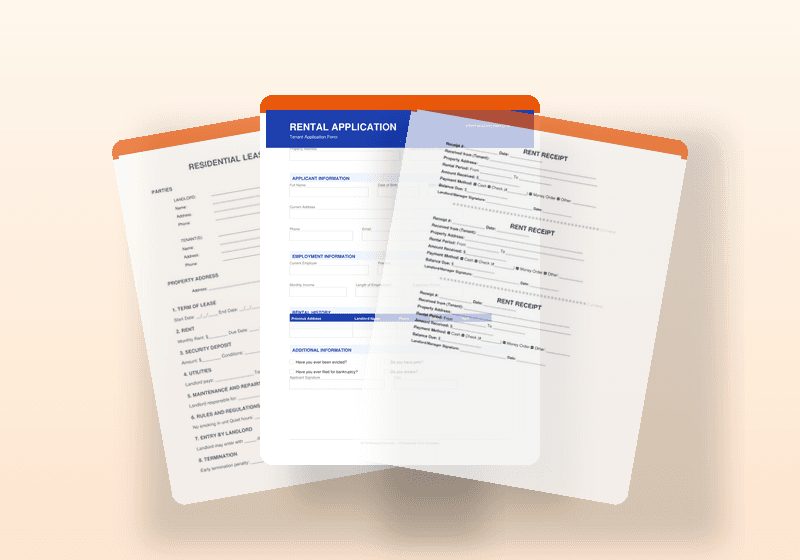
The template this guide walks through — ready to customize with your details in ZIP Bundle — 34 PDFs format.
The pay or quit notice
If the formal notice does not result in payment, the next step in most jurisdictions is a statutory notice — often called a "pay or quit" notice or "notice to pay rent or vacate." This is a formal legal document that begins the eviction process timeline in most states.
The pay or quit notice must comply with your state's specific requirements: the required notice period (typically 3, 5, or 7 days depending on your jurisdiction), the exact amounts owed, the method of acceptable payment, and the address where payment must be delivered. Errors in this notice can delay an eviction proceeding. Use a form specific to your state, not a generic template.
In most states, the pay or quit notice must be served in a specific manner — personal delivery to the tenant, posted on the door with a copy mailed, or delivered by a process server. Electronic delivery (email or text) typically does not satisfy service requirements for a statutory notice. Know your state's rules.
Documentation at every stage
Keep a written record of every communication in the late rent process: the date each notice was sent, how it was delivered, and any response from the tenant. This documentation supports your eviction filing if proceedings become necessary and protects you against claims that proper notice was not given.
If the tenant makes a partial payment, accept it in writing while explicitly noting that it does not constitute satisfaction of the full amount owed and that the balance remains due. This prevents a partial payment from being used to argue that you waived your right to the remaining balance or reset the notice period.
Know when to escalate and when to negotiate
A tenant with a strong payment history who is one month behind due to a documented temporary hardship is a different situation from a tenant who is chronically late and making partial payments. Professional landlords differentiate between these cases. A payment plan, documented in writing, can resolve a short-term cash flow problem without the cost and time of an eviction proceeding. A pattern of non-payment requires escalation.
Whichever path you take, documentation protects you. Every notice sent, every agreement made, every payment received — it all goes in the tenant's file.
Frequently Asked Questions
What is a late rent notice?
A late rent notice is a written document sent by a landlord to a tenant when rent has not been received by the due date or end of any grace period. It states the amount owed, any late fees applied, and a deadline for payment. It creates a formal paper trail and is typically the first step in the process that may lead to eviction proceedings if payment is not made.
How many days after rent is due should I send a notice?
Send an informal payment reminder on the due date or the day after. Send a formal late rent notice at the end of any grace period specified in your lease (typically 3-5 days). If the formal notice produces no payment, consult your state's landlord-tenant law for the required notice type and timeline before initiating eviction proceedings.
What is a pay or quit notice?
A pay-or-quit notice (also called a notice to pay rent or vacate) is a statutory legal document required to begin the eviction process in most states. It gives the tenant a specified number of days (typically 3, 5, or 7 depending on your state) to pay the full amount owed or vacate the property. The form must comply with your state's specific requirements or the eviction filing may be dismissed.
Can I accept partial rent payment after sending a notice?
Accepting a partial payment may, in some states, reset the notice period or waive your right to proceed with eviction for the remaining balance. If you accept partial payment, do so in writing and explicitly state that it does not constitute satisfaction of the full amount and that the balance remains due immediately. Consult your state's specific rules on partial payment acceptance.
Complete Property Management Bundle
Professionally designed and formatted. Available in ZIP Bundle — 34 PDFs format. 30-day money-back guarantee.
One-time purchase — use forever.
Related Guides
What Landlords Need in a Lease Agreement (Beyond the Basics)
Read guideLandlord & Property ManagementFirst-Time Landlord Checklist: Everything You Need Before Handing Over the Keys
Read guideLandlord & Property ManagementHow to Document a Move-Out Inspection to Protect Your Security Deposit
Read guide
Founder, PrintReadyForms · 25 years writing technical documents, contracts, scopes of work, and procedures
Published
All guides on PrintReadyForms are written to help business owners, landlords, contractors, and HR professionals use professional documents effectively. This content is for informational purposes only and does not constitute legal or financial advice. Consult a qualified professional for advice specific to your situation.