Small Business Tax Preparation — Document Checklist

In this guide
We cover everything you need to know about this topic — best practices, common mistakes to avoid, step-by-step guidance, and the right template to use. This guide takes about 6 min to read.
Every year, small business owners lose time and money during tax season because they are not organized. They scramble for receipts, call their bank for statements, and estimate expenses they should have been tracking. The result is missed deductions, higher accounting bills (accountants charge by the hour, and disorganized records take longer), and the nagging worry that something was forgotten.
Tax preparation is straightforward when you have the right documents ready. Here is what you need, organized by category.
Income documentation
Your accountant needs to see every dollar that came into the business during the tax year. This means gathering all 1099 forms received from clients who paid you $600 or more, your total gross receipts from payment processors (PayPal, Stripe, Square), bank deposit records showing all business income, and records of any cash payments received.
If your business has multiple revenue streams — product sales, service fees, rental income — organize income records by source. This is not just for tax filing; it helps you understand which parts of your business are actually driving revenue.
Expense documentation
Business expenses reduce your taxable income, but only if you can document them. The IRS expects you to have receipts or records for every deduction you claim. Key expense categories include rent or lease payments for your business space, utilities (electric, gas, water, internet, phone), office supplies and equipment, software subscriptions, insurance premiums, professional services (legal, accounting, consulting), marketing and advertising costs, vehicle expenses (mileage logs or actual expenses), travel and meals for business purposes, and contractor payments (1099s you issued).
The biggest missed deductions for small businesses are typically home office expenses, vehicle mileage, professional development, and software subscriptions. If you use part of your home exclusively for business, track those expenses carefully — the deduction can be significant.
Payroll records
If you have employees, your payroll records need to be complete and accurate. This includes W-2 forms for all employees, quarterly payroll tax returns (Form 941), state payroll tax filings, records of employee benefits provided, and workers compensation insurance documentation.
If you use a payroll service, they should provide most of these documents. Verify that you have them before your tax appointment — do not assume your payroll provider has sent everything to your accountant.
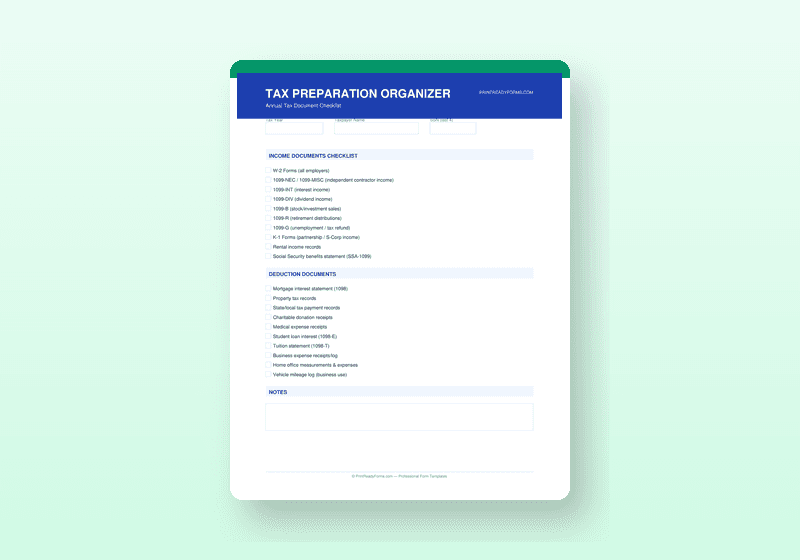
Tax Preparation Organizer
The template this guide walks through — ready to customize with your details in PDF, ZIP Bundle formats.
Asset and depreciation records
Any equipment, vehicles, or property your business purchased during the year may be eligible for depreciation deductions. Your accountant needs purchase receipts for major equipment, vehicle purchase documentation (including the percentage used for business), records of any property improvements, and a list of assets disposed of or sold during the year.
Keep prior-year depreciation schedules handy as well. Assets purchased in previous years continue to generate depreciation deductions across their useful life.
Banking and financial statements
Bring twelve months of bank statements for every business bank account and credit card. Your accountant uses these to reconcile your income and expense records and catch anything that might have been missed. Also bring year-end statements for any business loans or lines of credit, merchant account processing statements, and investment account statements if your business holds investments.
Prior year tax return
Always provide your previous year's tax return to your accountant, even if you used the same accountant last year. It serves as a reference point for year-over-year comparison and ensures carryforward items (net operating losses, depreciation schedules, estimated tax payments) are properly continued.
Quarterly estimated tax payments
If you made quarterly estimated tax payments during the year, bring records of every payment: the amount, the date paid, and the confirmation number. These payments reduce your tax liability at filing time, and missed documentation can mean you pay twice or face penalties for apparent underpayment.
The real advice: track it all year
The best tax preparation happens throughout the year, not in a rush during March and April. Set up a simple system: one folder (physical or digital) for each expense category, one for income records, one for payroll, and one for banking. Drop documents in as they arrive. When tax season comes, you hand your accountant a complete, organized package instead of a pile of receipts.
If you do not have a tracking system, start one now. A well-structured tax preparation organizer — with categories already defined and space to record running totals — is designed to make the habit easier to maintain, which can help reduce accounting time and improve the chance of capturing every deduction.
Tax Preparation Organizer
Professionally designed and formatted. Available in PDF, ZIP Bundle formats. 30-day money-back guarantee.
One-time purchase — use forever.
Related Guides

Founder, PrintReadyForms · 25 years writing technical documents, contracts, scopes of work, and procedures
Published
All guides on PrintReadyForms are written to help business owners, landlords, contractors, and HR professionals use professional documents effectively. This content is for informational purposes only and does not constitute legal or financial advice. Consult a qualified professional for advice specific to your situation.