5 Mistakes Contractors Make on Estimates (And How to Fix Them)

In this guide
We cover everything you need to know about this topic — best practices, common mistakes to avoid, step-by-step guidance, and the right template to use. This guide takes about 5 min to read.
Winning more jobs does not always mean lowering your price. Contractors consistently lose bids and generate on-site disputes because of how their estimates are structured, not because their price is too high. These five mistakes appear on contractor estimates every day. Every one of them is fixable.
Mistake 1: Writing a single total number instead of a breakdown
The single-number estimate — "Kitchen renovation: $18,500" — might feel like it protects you from clients shopping your line items. In practice, it does the opposite. When a prospect has three estimates and one of them is a lump sum with no breakdown, that estimate goes in the bin first. No breakdown signals that you either cannot explain your pricing or that you are hiding something.
A professional estimate breaks labour, materials, permits, sub-trades, and disposal into separate line items. This transparency does not invite price-shopping — it builds confidence. Clients who understand what they are paying for are more likely to sign and less likely to dispute the invoice.
Mistake 2: No scope exclusions
What your estimate does NOT include is as important as what it does. Without a clear exclusions section, every unclear assumption becomes a potential dispute when work begins. "I thought that was included" is the most expensive phrase in contracting.
Write an explicit exclusions section on every estimate. If your painting estimate does not include surface preparation beyond standard cleaning and sanding, say so. If your electrical estimate excludes permits, say so. If you are providing a bathroom renovation estimate that assumes the existing plumbing is in good working order, say that your price is contingent on that assumption and specify how additional work will be priced if it is not.
Exclusions are not fine print — they are professional communication. Clients who see a thorough exclusions section trust you more, not less.
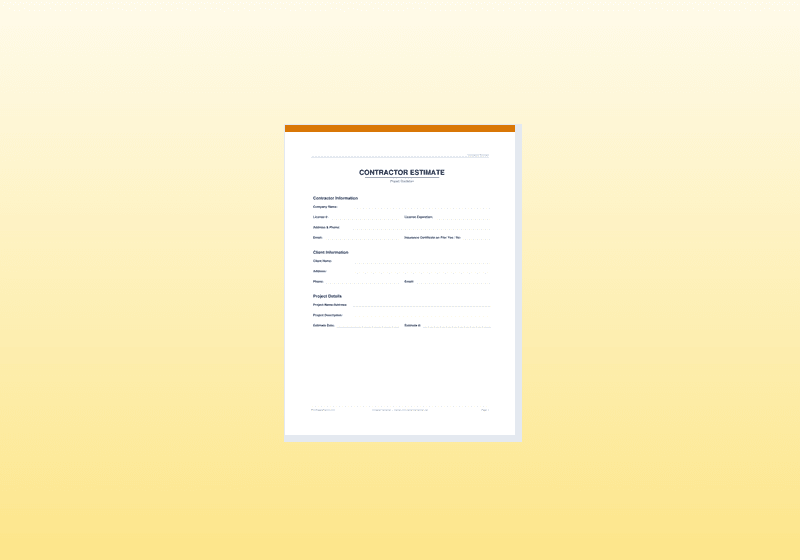
Contractor Estimate & Quote Pack
The template this guide walks through — ready to customize with your details in PDF, ZIP Bundle formats.
Mistake 3: No expiry date
An estimate without an expiry date is a liability. Materials prices change. Subcontractor availability changes. Labour rates change. If you give an estimate today and a client calls you in five months to accept it, you may be locked into a price that no longer covers your costs.
Put a validity period on every estimate. For most residential and light commercial work, 30 days is standard. For larger projects where materials need to be locked in, 14-21 days is appropriate. Simply add a line: "This estimate is valid for 30 days from the date of issue." It takes five seconds and protects you from real financial exposure.
Mistake 4: Vague scope of work descriptions
Vague scopes create scope creep, payment disputes, and arguments about what was agreed. "Bathroom renovation" describes almost nothing. What kind of tile? What fixtures? What does "renovation" include — are you removing the tub? Replacing the vanity? Waterproofing the walls?
Write your scope in specific, plain language that leaves no room for misinterpretation. Specify materials by product type or allowance amount. Note who is responsible for which elements. Describe the start and finish condition of the space. A specific scope protects you legally and sets clear expectations with the client before a single nail is driven.
Mistake 5: No payment terms
Many contractors send the estimate, get the job verbally agreed, and then have an awkward conversation about deposit and payment at the start of the first day on site. This is backwards. Payment terms belong on the estimate, before the client commits.
State your deposit requirement (typically 25–40% for residential work), your milestone payment schedule, and your final payment terms on the estimate itself. When the client signs the estimate, they are agreeing to your payment structure — not just your price. This eliminates the discomfort of the money conversation once work is underway.
One additional fix: use a consistent, professional template
All five of these mistakes share a root cause: estimates created ad hoc, from memory, in whatever format felt convenient at the time. A standardised estimate template eliminates this. When every estimate is built on the same structure, you stop forgetting critical sections, you look consistent and professional across every proposal, and you spend less time writing estimates and more time doing the work.
Contractor Estimate & Quote Pack
Professionally designed and formatted. Available in PDF, ZIP Bundle formats. 30-day money-back guarantee.
One-time purchase — use forever.
Related Guides
How to Write a Contractor Estimate That Wins Jobs
Read guideConstruction & Contractor FormsHow to Fill Out a Change Order (And Why Verbal Agreements Cost Contractors Money)
Read guideConstruction & Contractor FormsSubcontractor Agreement: What to Include When You Can't Afford a Lawyer
Read guide
Founder, PrintReadyForms · 25 years writing technical documents, contracts, scopes of work, and procedures
Published
All guides on PrintReadyForms are written to help business owners, landlords, contractors, and HR professionals use professional documents effectively. This content is for informational purposes only and does not constitute legal or financial advice. Consult a qualified professional for advice specific to your situation.