How to Write a Contractor Estimate That Wins Jobs

Key Takeaways
- A professional estimate includes your licence number, itemised pricing, a clear scope of work, and a payment schedule.
- Always include an exclusions section — what is NOT covered is as important as what is.
- Add a validity period of 30 days to every estimate so materials price changes after that window are not assumed to be included.
- A signed estimate is legally binding in most jurisdictions — it functions as your contract.
Most contractors lose jobs before they ever speak to a client. The estimate arrives, it looks like a rough number scrawled on a notepad, and the prospect calls someone else. Not because the price was wrong — because the presentation signalled that you are not a serious operator.
A professional contractor estimate does three things simultaneously: it wins confidence, sets expectations, and creates a documented record of what was agreed. Get this document right and you will close more jobs, collect deposits faster, and have less conflict on site.
What goes on a professional contractor estimate
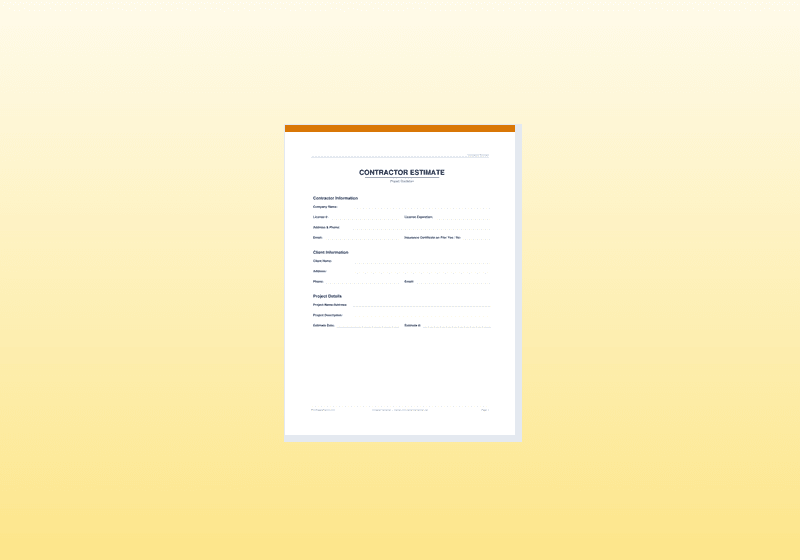
Your business details at the top
Your full business name, physical address, phone number, email, and licence number (if applicable in your state or trade) go at the very top. This is not optional. A client who cannot find your contact information after you have left their home is a client who does not call you back. Your licence number signals that you are operating legitimately — in many states it is legally required on estimates for work above a certain dollar value.
Client information and project address
Include the client's full name, address, phone, and email. Include the project address if it differs from the billing address. This information becomes the foundation of your contract if the estimate is accepted.
Estimate number and date
Number every estimate sequentially. This makes it easy to reference in conversation ("I'm calling about Estimate 047") and creates a professional record of your bidding volume. Include the date the estimate was prepared and an expiry date — typically 30 days for most residential work. Materials prices fluctuate, and an open-ended estimate can destroy your margin if costs rise.
Detailed scope of work
This is where most contractors underdeliver. Write out the scope of work in plain, specific language. Not "bathroom renovation" — describe exactly what is included: remove and dispose of existing tile, supply and install cement board, supply and install 12x24 porcelain tile in herringbone pattern to walls and floor, grout and seal, reinstall toilet and vanity. The more specific you are, the fewer disputes you have on site about what was agreed.
Specify materials by brand, model, or specification where relevant. If the client is supplying any materials, note that clearly. If your estimate is based on allowances (the client chooses their own fixtures within a set budget), state the allowance amounts explicitly.
Labour and materials line items
Break your pricing into line items. Some contractors resist this, worried the client will shop individual items. This is the wrong concern. A professional, itemised estimate demonstrates competence and builds trust. When a client can see what they are paying for, they are more likely to accept the estimate and less likely to dispute the final invoice.
Include a line item for labour, one for materials, any sub-trades you are engaging, permits, and disposal fees. Sales tax on materials should be a visible line item, not buried in the total.
Payment terms and schedule
State your deposit requirement, your payment milestones, and your final payment terms on the estimate itself. A typical residential estimate might read: 30% deposit upon acceptance, 30% at rough-in completion, 30% at substantial completion, 10% balance upon final inspection and client sign-off. Do not leave payment terms to the contract — putting them on the estimate sets expectations before the client signs anything.
Validity period and acceptance signature line
End the estimate with a clear validity period ("This estimate is valid for 30 days from the date above") and a signature and date line for the client to sign. When the client signs the estimate, you have a binding agreement. Without a signature, an estimate is just a number on paper.
Contractor Estimate & Quote Pack
The template this guide walks through — ready to customize with your details in PDF, ZIP Bundle formats.
The details that separate professional estimates from amateur ones
Specify what is NOT included
Exclusions protect you from scope creep. If your painting estimate excludes surface preparation beyond two coats of primer, say so. If your electrical estimate excludes permits, say so. A clear exclusions section prevents the conversation where a client says "but I thought that was included" — because you told them upfront it was not.
Note any assumptions
Estimates often rely on conditions you cannot fully verify until work begins. If your flooring estimate assumes an existing subfloor in sound condition, note it: "This estimate assumes the existing subfloor is level, dry, and structurally sound. If subfloor repairs are required, additional charges will apply at the then-current rate." This is not a loophole — it is professional transparency.
Include a brief company statement
A two-sentence statement about your business — years in operation, licence and insurance status, your warranty terms — adds weight to a professionally formatted estimate. Clients choosing between two contractors of equal price will often choose the one who demonstrated more professionalism in the estimate.
Common estimate mistakes that cost jobs
Vague scope descriptions are the most expensive mistake. When your scope says "kitchen renovation" and a competitor's scope says exactly what they will deliver, the competitor wins on perceived value even if their price is higher.
Undated or open-ended estimates with no expiry are a business risk. Materials and labour costs change. Always include a validity period.
Missing payment terms force an awkward conversation after the client has already said yes. Put terms in the estimate so you are aligned before work begins.
No exclusions section leads to arguments on site. Write out what you are not doing and what conditions your estimate depends on.
The right format makes a measurable difference
A professional, consistent estimate template signals that you are organised, that you take your business seriously, and that you will manage the project with the same level of care. Handwritten estimates, estimates sent as plain email text, and estimates without your contact details or licence number all reduce your close rate. Your estimate is not just a price — it is a preview of how you run your business.
Frequently Asked Questions
What should a contractor estimate include?
A contractor estimate must include your business name, licence number, and contact details; the client's name and project address; a detailed scope of work; itemised labour and materials costs; any exclusions or assumptions; payment terms and deposit requirement; an expiry date; and a signature line for client acceptance.
How detailed should a contractor estimate be?
As detailed as possible. Vague estimates cause more disputes than detailed ones. Specify materials by type, grade, and quantity. Describe the work in plain language so there is no ambiguity about what is included. A detailed estimate also demonstrates competence, which increases close rates.
How long should a contractor estimate be valid?
Most contractors set a 30-day validity period for residential estimates. For commercial or larger projects, 14-21 days is more appropriate because materials costs and subcontractor availability can change. Always state the expiry date clearly on the estimate.
Can a client negotiate after receiving a contractor estimate?
Yes. An estimate is an offer, and negotiation is normal. If a client asks to reduce the scope, document the change in the estimate and reissue it. If they want the same scope at a lower price, you can negotiate or decline. Never verbally agree to a lower price without updating and reissuing the written estimate.
Contractor Estimate & Quote Pack
Professionally designed and formatted. Available in PDF, ZIP Bundle formats. 30-day money-back guarantee.
One-time purchase — use forever.
Related Guides
5 Mistakes Contractors Make on Estimates (And How to Fix Them)
Read guideConstruction & ContractorsContractor Estimate vs. Invoice: What's the Difference and When to Use Each
Read guideConstruction & Contractor FormsHow to Fill Out a Change Order (And Why Verbal Agreements Cost Contractors Money)
Read guide
Founder, PrintReadyForms · 25 years writing technical documents, contracts, scopes of work, and procedures
Published
All guides on PrintReadyForms are written to help business owners, landlords, contractors, and HR professionals use professional documents effectively. This content is for informational purposes only and does not constitute legal or financial advice. Consult a qualified professional for advice specific to your situation.