Employee Write-Up Form: How to Document Employee Issues the Right Way

Key Takeaways
- A write-up documents a specific incident with factual, observable language — not opinions or characterisations.
- Every write-up must include the date, the specific behaviour, the policy violated, expected improvement, and a timeline.
- The employee must sign to acknowledge receipt — not to agree. A refusal to sign should be noted and witnessed.
- Consistent documentation across all employees in comparable situations is critical to avoid discrimination claims.
Most managers handle employee write-ups badly. Either they avoid them entirely until the situation becomes serious, or they write something vague and emotional that creates more risk than it prevents. Both approaches expose the business to legal problems and make it harder to manage the employee going forward.
A properly completed employee write-up is a factual, professional record of a specific performance or conduct issue. Done correctly, it protects the business, sets clear expectations for the employee, and creates the documentation trail that any termination decision will eventually depend on.
Why documentation matters more than the conversation
Verbal warnings are forgotten, reinterpreted, or denied. Written documentation creates a shared record that both the employer and the employee have acknowledged. If an employment dispute reaches a labour board, tribunal, or court, the employer who has documented progressive discipline in writing is in a fundamentally different position than the employer who says "I told him about this three times."
Consistent, documented discipline also creates a defensible record against claims of discrimination or unfair treatment. If your documentation shows that you applied the same standard to other employees in comparable situations, you have a much stronger defence.
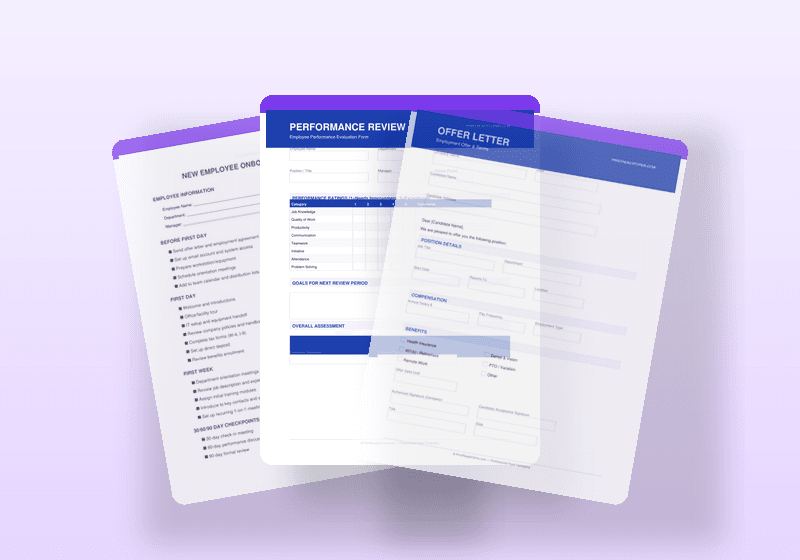
Complete HR & Employment Bundle
The template this guide walks through — ready to customize with your details in ZIP Bundle — 35 PDFs format.
What a professional write-up form must include
Employee and position details
The full name of the employee, their job title, their department, and their manager. Also include the date the write-up was completed. This seems obvious, but write-ups completed after the fact — or undated — lose much of their legal weight.
The specific incident or behaviour
Describe exactly what happened. Use factual, observable language. Not "bad attitude" — but "on March 14, the employee raised their voice at a customer and refused to process their return when asked to do so by the supervisor present." Specific, observable facts are defensible. Subjective characterisations are not.
Include the date the incident occurred, the time if relevant, the location, and the names of any witnesses. If this is a pattern rather than a single incident, reference previous conversations or warnings with their dates.
The policy or standard that was violated
Reference the specific company policy, procedure, or job requirement that the employee failed to meet. "This behaviour is inconsistent with our customer service policy outlined in the Employee Handbook, Section 4.2" is more defensible than a general statement that the conduct was unacceptable.
Previous warnings or counselling
If this is not the first incident, reference the prior discussions. "This is the second verbal warning regarding attendance in the past 90 days. A verbal warning was issued on February 18 and noted in the employee's file." This establishes a documented pattern of progressive discipline.
Expected improvement and timeline
State clearly what the employee must do differently and by when. "The employee is expected to arrive no later than their scheduled start time for a period of 90 days from the date of this notice" is specific and measurable. "Improve their performance" is not.
Consequences if the issue continues
Be explicit about what happens next if the issue is not resolved. "Failure to meet this expectation may result in further disciplinary action up to and including termination" is standard language that should appear on every write-up. The employee should not be surprised by the consequences if they continue.
Employee acknowledgement signature
The employee must sign and date the form to acknowledge receipt. Critically, the signature acknowledges that the employee has received and read the document — not that they agree with it. If an employee refuses to sign, note this on the form and have a witness sign to confirm the employee was presented with the document and declined to sign. A refusal to sign does not invalidate the document.
Manager and HR signatures
The manager completing the form and an HR representative (if applicable) should also sign and date the document. This establishes who was involved and when.
What to avoid in employee write-ups
Emotional language weakens documentation. Words like "difficult," "disrespectful," "bad attitude," and "doesn't care" are subjective and easy to contest. Stick to observable behaviour: what the employee said or did, not your interpretation of their intent or character.
Vague improvement expectations make follow-up impossible. If you cannot measure whether the employee has improved, the write-up provides no practical benefit. Be specific about what success looks like.
Delays in documentation reduce their effectiveness. A write-up completed two weeks after an incident is weaker than one completed the same day or the following morning. Document promptly.
Inconsistent application is a major legal risk. If you write up one employee for an infraction you have ignored in others, you expose the business to discrimination claims. Apply your standards consistently across all employees in similar roles.
Keep a clean paper trail from the beginning
Employee issues rarely arrive without warning. The write-up is typically the step that formalises what has already been a pattern of informal coaching and verbal guidance. Treat every write-up as a document that may one day be read by an employment lawyer. Write it professionally, keep it factual, and retain a copy in the employee's personnel file. That standard of documentation protects the business and treats the employee with the professionalism the situation requires.
Frequently Asked Questions
What is an employee write-up form?
An employee write-up form is a formal written record of a specific performance or conduct issue. It documents what happened, when, which policy was violated, what improvement is expected and by when, and the consequences if the issue continues. It is signed by both the manager and the employee and kept in the employee's personnel file.
Does an employee have to sign a write-up?
An employee's signature on a write-up acknowledges that they have received and read the document — not that they agree with it. If an employee refuses to sign, note this on the form and have a witness sign to confirm the employee was presented with the document. The refusal does not invalidate the write-up.
How do I write up an employee without creating legal risk?
Use factual, observable language describing specific incidents and dates rather than subjective characterisations. Reference the specific policy that was violated. Set measurable improvement expectations with a clear deadline. Apply the same standard consistently across all employees in comparable situations. Document promptly, not weeks later.
What happens if I do not document employee issues?
Without written documentation, a termination decision for performance or conduct issues is difficult to defend. An employee who was verbally warned multiple times can claim they were never formally notified of the issue. Documented progressive discipline — write-ups, warnings, performance improvement plans — is what makes a termination legally defensible.
Complete HR & Employment Bundle
Professionally designed and formatted. Available in ZIP Bundle — 35 PDFs format. 30-day money-back guarantee.
One-time purchase — use forever.
Related Guides
Write-Up vs Disciplinary Action: What's the Difference and When to Use Each
Read guideHR & Employee FormsHow to Write an Employee Termination Letter (With What to Say and What to Avoid)
Read guideHR & Employee Forms5 HR Documents Every Small Business Needs (And Most Don't Have)
Read guide
Founder, PrintReadyForms · 25 years writing technical documents, contracts, scopes of work, and procedures
Published
All guides on PrintReadyForms are written to help business owners, landlords, contractors, and HR professionals use professional documents effectively. This content is for informational purposes only and does not constitute legal or financial advice. Consult a qualified professional for advice specific to your situation.