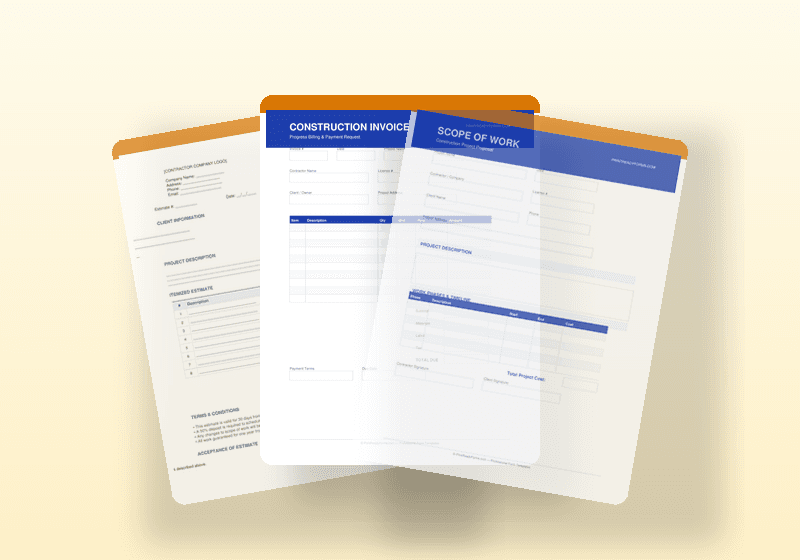
Construction & Contractor Forms Bundle — 18 Job Management PDF Templates
18 contractor forms covering estimates, invoices, change orders, lien waivers, safety, and project management
What's Included
- 18 construction PDF forms covering every stage from bid to project closeout
- Professional Estimate with materials/labor breakdown, warranty terms, and payment schedule
- Change Order form with formal authorization and Change Order Log for tracking
- Construction Invoice in AIA-style format for progress billing
- Conditional and Unconditional Lien Waivers for protecting payment rights
- Daily Construction Log with weather, crew, equipment, and progress fields
- Safety Toolbox Talk Record and Risk Register for OSHA compliance documentation
- Payment Application Worksheet for formal draw requests
Available Formats
What happens after purchase
In Construction & Contractors · Have questions? See our FAQ
Note: Template only. Not legal or licensing advice. Contractor licensing, lien notice timelines, and required disclosures vary by state and trade. Verify license requirements with your state board and have key agreements reviewed by an attorney familiar with construction law.
What Forms Does a Contractor Legally Need?
A contractor's biggest financial risks rarely come from bad workmanship — they come from missing paperwork. A verbal scope change that was never documented, a payment released without a lien waiver on file, or a project with no daily record when a dispute lands in court: each of these is a paperwork gap, not a craftsmanship one. Regardless of trade, license class, or project size, five documents form the legal backbone of a compliant contracting operation. This bundle includes professionally formatted templates for all five, plus 13 more covering the full lifecycle from first bid to final lien release.
1. Written Estimate
Every job should start with a written estimate — not a verbal number given on-site. A proper estimate breaks out materials and labor separately, states a validity period, spells out payment terms (deposit, milestone draws, final payment), and notes what is explicitly excluded from scope. Most estimate disputes happen because the contractor and client remember the conversation differently; a signed written estimate removes the ambiguity and becomes the reference point every later change order is measured against.
2. Signed Contract or Scope of Work
Once the estimate is accepted, it needs to become a signed contract or scope-of-work document before work begins. This is the document that defines what “done” means: specifications, materials, timeline, and payment schedule tied to milestones. Many states require a signed contract above a minimum dollar threshold to enforce mechanic's lien rights at all, and a growing number require specific disclosure language for residential work — check your state's contractor licensing board before using a generic template as-is.
3. Change Order (With Signed Authorization)
“We'll just add it to the bill” is how unpaid change orders happen. Every scope change — a client upgrade, an unforeseen site condition, a code-required fix — needs a Change Order signed before the additional work starts, not after it's finished. The form should reference the original contract, describe the added or removed scope, and show the revised contract total. Contractors who skip this step routinely absorb thousands of dollars in unbilled extra work, or spend months trying to collect on work the client insists was never approved.
4. Lien Waiver (Conditional and Unconditional)
A lien waiver is what you exchange for payment — it releases your right to file a mechanic's lien against the property for the amount paid. Use a conditional waiver when payment is expected but not yet cleared, and an unconditional waiver only after funds have actually cleared. Getting this sequence backward is one of the most common — and costly — mistakes contractors make, since an unconditional waiver signed too early can release lien rights before the check clears. Lien law is state-specific: see our Texas contractor lien law guide for statutory notice deadlines and required waiver language.
5. Daily Construction Log
A daily log — weather, crew on site, equipment used, work completed, and any issues encountered — is the least glamorous document on this list and the most valuable when a dispute reaches litigation. Delay claims, weather-related schedule extensions, and disputes over what was actually installed are decided on contemporaneous records, not memory. A daily log kept consistently for the life of the project is often the single piece of evidence that resolves a claim in the contractor's favor.
Licensing requirements — and the specific forms your state expects to see on file — vary widely. If you work in Georgia or Michigan, review our state-specific guides before finalizing your paperwork: Georgia contractor licensing requirements and Michigan contractor licensing requirements. All three state guides are free and cover registration, bonding, and the specific notices your contracts and lien waivers need to reference.
What Makes This Template Different
Construction projects run on documentation. Missing a signed change order or lien waiver can cost you thousands. This bundle gives contractors, builders, and subcontractors every form they need to run clean, professional projects from bid to closeout.
Pre-Construction: Contractor Estimate (2-page, with materials/labor breakdown, warranty terms, and payment schedule), Subcontractor Bid Comparison (compare up to 6 bids across 8 criteria), Scope of Work. During Construction: Construction Invoice (AIA-style format), Change Order Form with signed authorization, Change Order Log, Field Work Directive, Daily Construction Log (weather, crew, progress, issues), Weekly Progress Report, Material Takeoff Sheet, Project Schedule Template. Financial & Legal: Payment Application Worksheet, Conditional Lien Waiver, Unconditional Lien Waiver, Preliminary Notice, Notice of Completion. Safety: Safety Toolbox Talk Record, Risk Register.
18 forms. Every document a professional contractor uses from first estimate to final lien waiver.
Who Is This For?
This template is the right fit if you are any of the following:
- General contractors managing residential and commercial construction projects
- Subcontractors who need professional documentation for every job
- Home builders and remodelers running multiple concurrent projects
- Construction project managers responsible for compliance and documentation
Read Before You Use
All guides →These free guides explain what each section of this document means — so you fill it in correctly, not just completely.
How to Use This Template
- 1Use the Estimate form for every job — it protects you if a client disputes scope
- 2Issue a Change Order every time scope changes — never proceed on a verbal agreement
- 3File Daily Logs throughout the project to document progress and protect against claims
- 4Submit Lien Waivers when receiving progress payments to release the client's lien risk
- 5Use the Notice of Completion to formally close the project and start the lien period clock
Starting From Scratch
Generic and time-consuming
- Generic layout — signals an unprepared operation
- Missing fields US counterparties expect
- Hours of trial-and-error formatting
- Formatting breaks when edited
One-time · $44.99 · 30-day guarantee · Instant download
Questions About This Template
Common questions answered before you buy.
Are lien waivers state-specific?
Lien waiver requirements vary significantly by state. Some states have mandatory statutory forms. These templates are general-purpose — verify requirements with a local construction attorney.
Can I use the Change Order form for time-and-materials changes?
Yes. The Change Order form includes fields for both fixed-price and time-and-materials adjustments to the original contract.
How many forms are in this bundle?
18 PDF forms covering estimates, invoicing, change orders, daily logs, lien waivers, safety records, and project closeout.
Explore More Templates
Other templates that work well alongside this one.
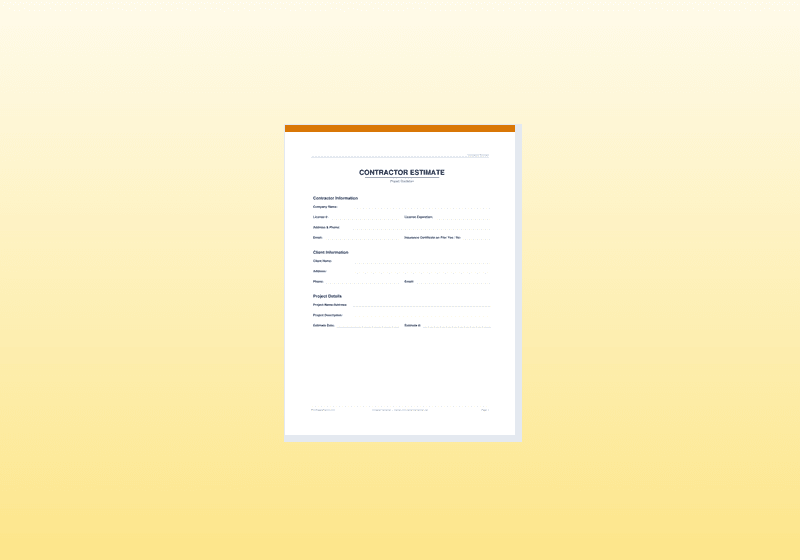
Contractor Estimate & Quote Pack
Professional 2-page estimate with materials/labor breakdown, scope of work, change order, and bid comparison
Construction Contract & Forms Pack
Complete bids, contracts, change orders, lien waivers and project management forms for general contractors, remodelers and trades.
Contractor Project Control Kit + 6 Core Contracts
A 10-sheet Excel project control workbook — estimate, track, invoice, and close out — paired with 6 attorney-informed contractor contracts in Word and PDF.